
thumbnail image
  • ABOUT
  • BIO
  • MUSIC
  • WORKS
  • SHOP
  • …  
    • ABOUT
    • BIO
    • MUSIC
    • WORKS
    • SHOP
    • ABOUT
    • BIO
    • MUSIC
    • WORKS
    • SHOP
    • …  
      • ABOUT
      • BIO
      • MUSIC
      • WORKS
      • SHOP
      • Drifting Slop

        A Digital Game of Telephone

        By HopesAndDrums

      • Three Videos

        Questioning the Role of Generative AI

        in the Context of Art History

        • The Treachery of Drifting Slop
        • The Fountain of Drifting Slop
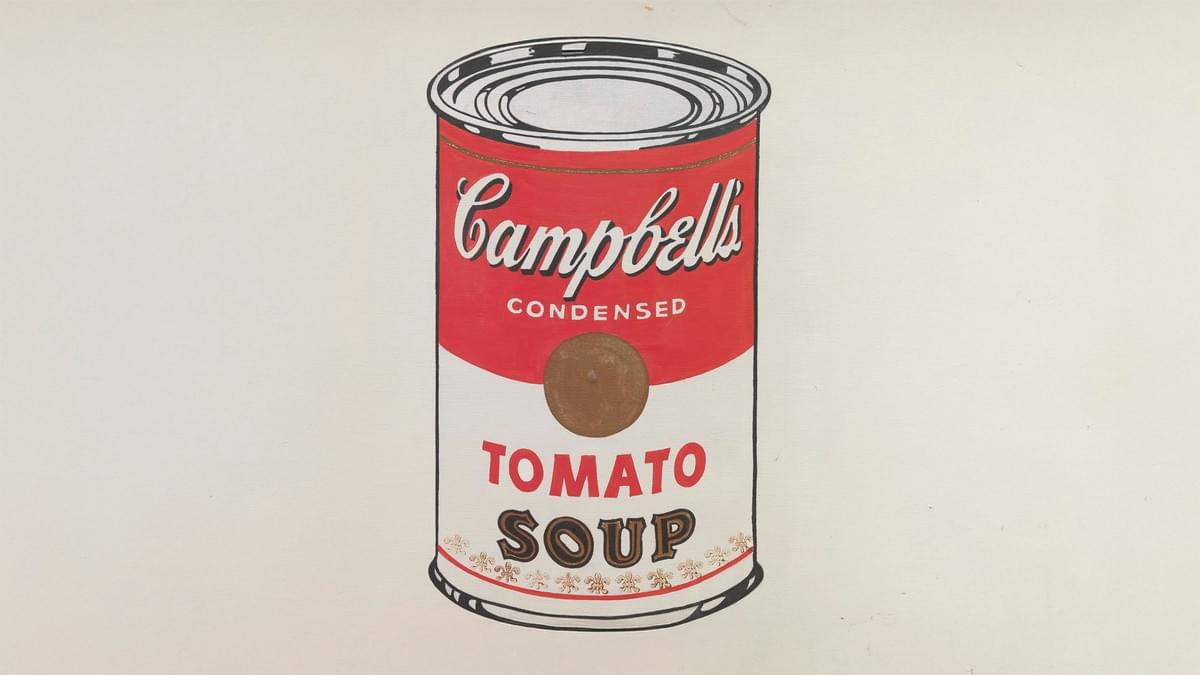
        • The Soup of Drifting Slop

        Drifting Slop is a series of videos and corresponding images that ask what happens to meaning when it passes through machines that don't understand it.

        Starting with three works that already probe the gap between art and what it represents—René Magritte's The Treachery of Images (This is Not A Pipe), Marcel Duchamp's Fountain (a porcelain urinal he showed as a “readymreadymade” artw artwork), and one of Andy Warhol's Campbell's Soup Cans—the piece encourages two generative AI models to describe the works and collaborate on an exquisite-corpse-style exchange as we watch their outputs drift. With each pass, the original image evolves further, like a whispered phrase mutating around the circle in a game of telephone. A drift that might be seen as a metaphor for the cultural, social and economic shifts underway as a result of AI's spread,

        The piece serves as a bridge between twentieth-century high art history and the current, gritty vernacular of “slop,” usually shorthand for AI’s digital slurry of glistening, homogenized mediocrity, and is often used to dismiss AI art outright. Here, that meaning shifts. Just as Magritte, Duchamp, and Warhol were once dismissed as jokes, this project takes “garbage” outputs—glitches, mistakes, middling sheen—and steers them toward images that might resonate more deeply on their own terms.

        The resulting videos below are less a comment on art made using AI models than a provocation about what's gained and lost as these new tools reshape how images are made, seen, and valued. They also ponder what new art forms might emerge as artists learn to work through “slop,” embracing its glitches, and/or pushing past it entirely, toward something new.

        This is not a pipe? This is not even an image. This is the byproduct of machines and humans collaborating on hallucinatory visions.
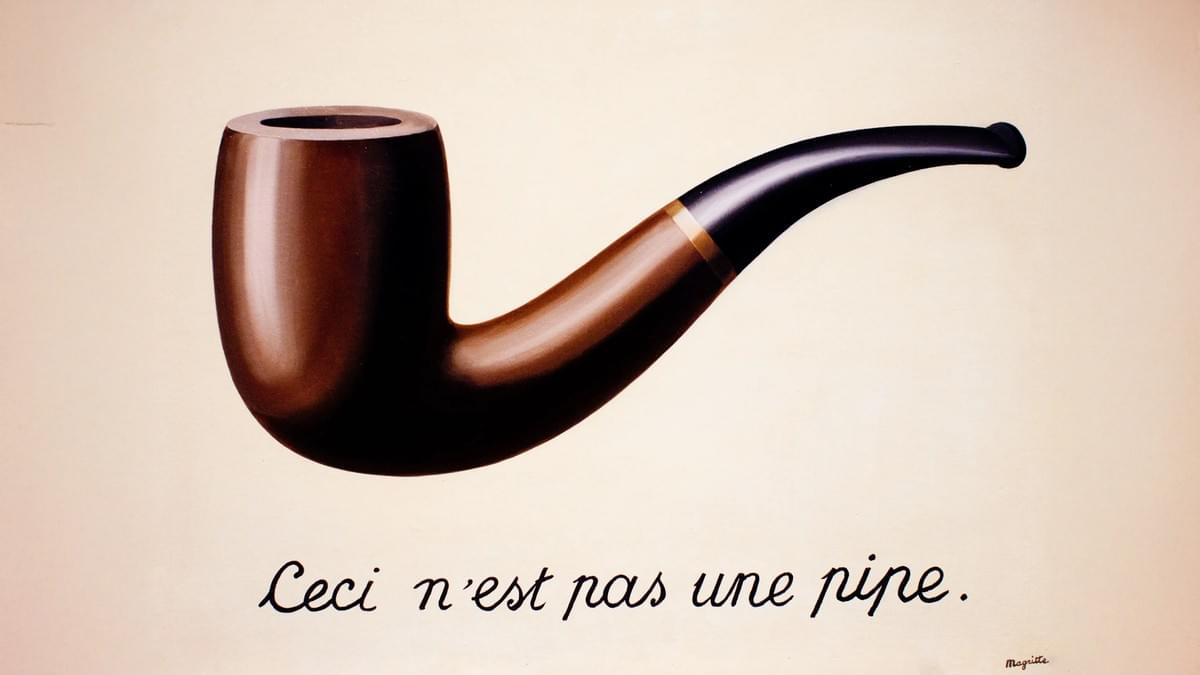
        A chatbot was shown Magritte's The Treachery of Images (This is Not a Pipe) and directed to “describe this image as a prompt for an image generator, as though you have no historical context.” After some refinement, its response was: “Based on the visual elements alone, without referencing the artist or the specific historical meaning, here is a descriptive prompt:

        “A realistic oil painting of a classic curved tobacco pipe floating centrally against a solid cream-colored background. The pipe features a polished brown wooden bowl with smooth gradients and a curved black stem. Below the pipe, centered in the lower third of the canvas, is the text ‘Ceci n'est pas une pipe’ written in elegant, black, schoolbook-style cursive calligraphy. The art style is precise and clean, resembling a high-quality vintage commercial illustration or a trompe-l’œil study, with soft studio lighting and a smooth, matte finish.”

        The first image below is what the image generator made from that prompt. The images that follow are the result of continually feeding the generated images back into the chatbot, then using the resulting prompts in the image generator, etc—a feedback loop—for ten generations. Finally, all the images were woven together into a single, exquisite-corpse-like narrative, as seen in the video above.

        Prompt: A realistic oil painting of a classic curved tobacco pipe floating centrally against a solid cream-colored background. The pipe features a polished brown wooden bowl with smooth gradients and a curved black stem. Below the pipe, centered in the lower third of the canvas, is the text "Ceci n'est pas une pipe" written in elegant, black, schoolbook-style cursive calligraphy. The art style is precise and clean, resembling a high-quality vintage commercial illustration or a trompe-l’œil study, with soft studio lighting and a smooth, matte finish.
        Prompt: A detailed colored pencil or soft pastel drawing of a textured wooden tobacco pipe. The pipe is a warm reddish-brown color and features distinct horizontal carved grooves or ridges ringing the bowl and the shank, leading to a curved black mouthpiece. The object floats against a dramatic two-tone background: the upper half is solid pitch-black, fading into a cream-colored surface below, creating a sharp horizon line. Centered at the bottom is a line of nonsensical, garbled text in a distorted serif font that reads "Ceci Vi nais un'n'st cas pipe." The image has a grainy, textured quality, resembling a scan of a drawing on paper.
        Prompt: A surreal illustration of a curved tobacco pipe featuring a heavy, striated texture, as if the bowl is made of tightly wound coils, layered twine, or a topographic wood grain. The pipe has a reddish-brown hue and connects to a flat black mouthpiece. The background is a gradient composed of fine, horizontal engraving lines or scanlines, transitioning from pitch black at the top, through a band of dark blue, to a cream-beige at the bottom. Below the pipe, centered text in a serif font reads "Ceeis viais pipe, " with a smaller line of nonsense text underneath reading "Vi' ai n ni nairnsan ciase." The style blends vintage steel engraving with a digital, textured 3D aesthetic.
        Prompt: A surreal, vintage steel engraving or woodcut illustration of a mutated tobacco pipe. The pipe has an organic, biological appearance, with a segmented, ribbed texture resembling a worm or muscle fibers. Two strange, curved, antenna-like horns or roots protrude upward from the rim of the bowl. The object is rendered with heavy cross-hatching and fine linework. It floats against a background of dense horizontal engraving lines that create a gradient from deep black and midnight blue at the top to a pale parchment cream at the bottom. Centered below is the text "Ceeis vaias pipe" in a serif font, followed by two smaller lines of illegible, Latin-looking gibberish.
        Prompt: A surreal, vintage copperplate engraving or scientific illustration of a bizarre, symmetrical U-shaped object. The object resembles a segmented, armored worm or a double-ended pipe curved like a crescent moon, resting on a textured ground. Two long, thin, curved stems rise from either end. Erupting from the top of the left stem is a strange, vertical, root-like or smoke-like organic growth. The background is defined by heavy horizontal hatching lines forming a gradient from deep midnight blue and black at the top to a warm cream parchment color at the bottom. Centered below is widely spaced serif text reading "Caes v p e" with a tiny line of cursive gibberish underneath.
        Prompt: A high-contrast woodcut or scratchboard illustration of a surreal, segmented organic form resting on a flat surface. The object is curved like a crescent and features heavy, ribbed armor plating similar to a grub or a chrysalis. The left end terminates in a split, fork-like double horn, while the right end tapers to a long, sharp, singular point. The background features a turbulent, dark sky rendered with chaotic, wavy white lines against deep black, contrasting with a horizontally hatched ground. The entire image is monochromatic, resembling black ink on cream paper. Centered below in a serif typeface is the text "Cees viais pipe" with a tiny, illegible caption underneath.
        Prompt: A dramatic, high-contrast woodcut or linocut print of a mythical segmented sea monster or armored larva. The creature is massive and crescent-shaped, featuring heavy vertical plating along its body. The front end (left) bristles with three sharp, tusk-like spikes erupting from a cluster of barnacles, while the tail end (right) curves upward into a serrated, spine-like point. The background is a chaotic, swirling night sky filled with turbulent, wavy lines surrounding a dark, eclipsed moon, contrasting with a horizontally waved ocean or dune surface below. The image is framed with a border, and a separate rectangular caption box at the bottom contains the serif text "Cees viias pipe." The palette is strictly two-tone: black ink on cream paper.
        Prompt: A dark, intricate woodcut or linocut illustration on aged paper. The central subject is a grotesque, U-shaped organic mass, resembling a giant, spiky caterpillar, a shriveled alien larva, or a mutant seed pod curled into a crescent. Its surface is densely textured with bumps, bristles, and jagged dorsal ridges. The creature sits upon rolling dunes. The sky above is filled with chaotic, swirling wind patterns surrounding an ominous, solid black circle (an eclipse) in the upper left. In the bottom right corner, a distinct rectangular text box contains the disjointed serif text "Ces..v. V. visa pipe". The style is archaic, surreal, and high-contrast, evoking vintage occult illustrations.
        Prompt: A dramatic, vintage woodcut or linocut landscape featuring a massive, spiky, serpentine monster curving upwards like a crescent moon. The creature has a saw-toothed spine and heavy, etched texture, resembling a dragon or giant worm. It frames a large, ominous black sun or eclipse in the sky, which is filled with radiating lines and swirling, turbulent clouds. The ground consists of rugged, hatched hills. In the bottom right corner, elaborate, stacked rectangular cartouches contain faux-Latin gibberish text reading "Ces VICINA" and other indecipherable symbols. The palette is a two-tone sepia and black, resembling an antique book illustration.
        Prompt A highly detailed, vintage woodcut or copperplate engraving of a surreal apocalypse. To the right, a massive, crescent-shaped behemoth rises from the sea or dunes; it is covered in dense, sharp thorns and resembles a spiky mythological sea serpent or giant caterpillar. To the left, a large, solid black eclipse dominates the sky, surrounded by radiating halo lines and stylized, scroll-like clouds. The foreground consists of rolling, textured waves or hills rendered with heavy hatching. In the bottom right corner, a formal rectangular cartouche contains the Latin-esque text "Ces, vis vi, visria." The image is monochromatic, black ink on aged beige paper.

        The same process described above was used for the next two videos and their corresponding images.
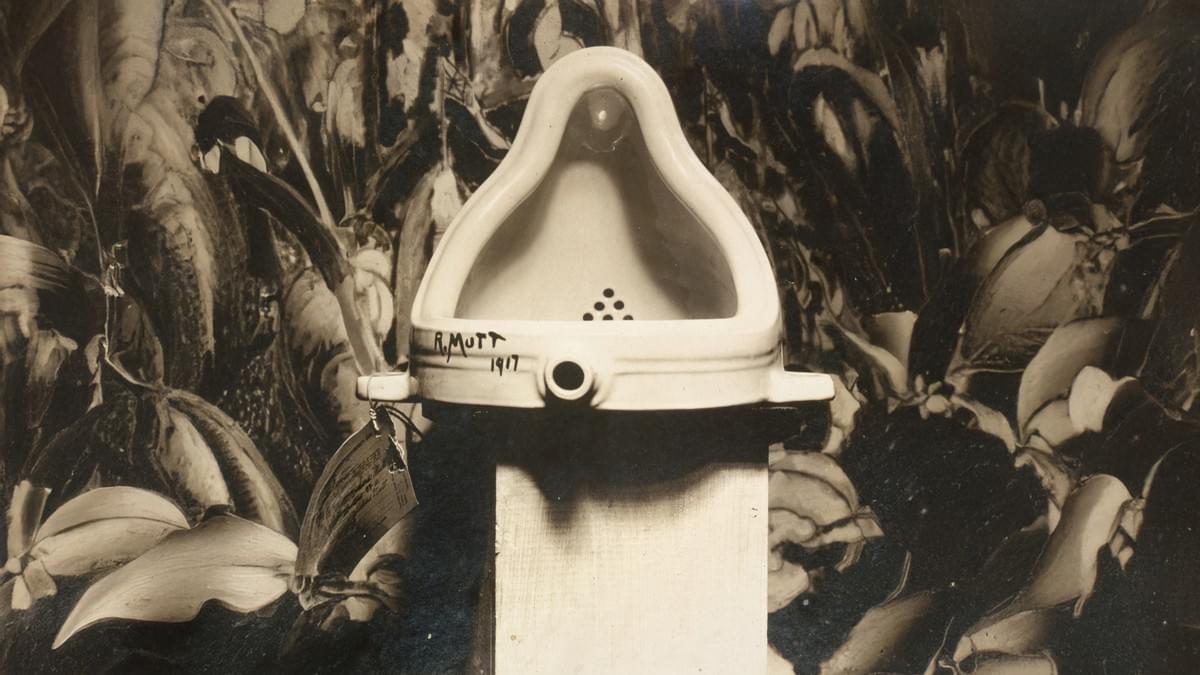
        Here's what the chatbot wrote about Duchamp’s Fountain:

        “A high-contrast black and white photograph of a white, glossy porcelain urinal resting on its flat back side atop a plain white rectangular surface. The object is oriented so the drain holes face the viewer. On the lower left outer rim, the text "R. MUTT 1917" is hand-painted in crude, dark brushstrokes. The background behind the object is dark and out of focus, featuring a pattern of blurry, lighter geometric shapes and heavy lines that suggest a textured backdrop or canvas. The lighting is harsh, creating bright white highlights on the ceramic curves and deep shadows in the background.”

        That was the prompt for the first image below.
        Prompt: A high-contrast black and white photograph of a white, glossy porcelain urinal resting on its flat back side atop a plain white rectangular surface. The object is oriented so the drain holes face the viewer. On the lower left outer rim, the text "R. MUTT 1917" is hand-painted in crude, dark brushstrokes. The background behind the object is dark and out of focus, featuring a pattern of blurry, lighter geometric shapes and heavy lines that suggest a textured backdrop or canvas. The lighting is harsh, creating bright white highlights on the ceramic curves and deep shadows in the background.
        Prompt: A black and white photograph captures a glossy, white ceramic vessel with an organic, egg-like shape, resembling a urinal, standing upright on a pristine white rectangular pedestal. The object features a large oval opening at the front, revealing a hollow interior with two small dark holes near the top and a drain-like indent at the bottom. Across the upper front curve, the word "MUTI" is written in bold, hand-painted black capital letters, flanked by the smaller characters "1 R" to the left and "97 9" to the right. A dramatic spotlight from above highlights the smooth curve of the ceramic object and casts a sharp, dark shadow beneath its base onto the pedestal. The background is a large, textured panel covered in dense, chaotic black line drawings and sketches of architectural or mechanical structures against a grey wall. The style is a high-contrast, monochromatic installation photograph.
        Prompt: A wide-angle, cinematic photograph of a tall, sleek white ceramic object standing on a white pedestal on the right side of the frame. The object is rectangular with soft rounded edges, resembling a modern industrial tank or appliance housing. Printed in bold black letters near the top is the word "MUTI", with the number "81-" positioned directly below it. A small, dark metallic spout or knob protrudes from the center of the object. The background is a textured, dimly lit wall covered in messy, intricate architectural sketches, grid lines, and technical drawings. A strong spotlight illuminates the white ceramic object, creating a high contrast against the shadowy, sepia-toned industrial environment.
        Prompt: A photorealistic product shot of a glossy, white rectangular canister with rounded corners, resembling a high-end ceramic jerry can or hard-shell case. The object sits on a white surface. It features a chrome cap or nozzle on the very top and a silver metal latch on the upper right side. On the smooth front face, the text "MUTI" is printed in clean, sans-serif black letters, with the number "81" centered below it. There is a small circular chrome lock or button near the top center. The background is a warm, sepia-toned wall covered in detailed technical architectural drawings and house cross-sections in black ink. The lighting is soft and warm, creating vertical highlights on the edges of the white object.
        Prompt: A detailed photograph captures a large, glossy white rectangular industrial tank with rounded corners, standing on a white pedestal on the right side of a grungy room. On the front face of the tank, the word "MUTI" is printed in bold, black, sans-serif capital letters, with the number "811" directly below it. A complex arrangement of metal pipes, valves, and fittings emerges from the top surface of the tank. The background wall is aged, stained, and sepia-toned, covered in faded technical architectural blueprints, diagrams, and grid lines. Exposed metal conduits and pipes run horizontally along the wall near the floor, which is dark and concrete. Dramatic, high-contrast lighting from the right illuminates the white tank, casting deep shadows on the left and emphasizing the textures of the wall. The overall feel is industrial and utilitarian.
        Prompt: A detailed, sepia-toned photograph captures a large, aged, horizontal white industrial storage tank resting on a concrete pedestal against a rough, textured wall. The tank has rounded ends and appears slightly weathered. On its side, the text "**MUTI**" is stenciled in large, bold black letters, with the number "**811**" directly below it. A complex arrangement of exposed metal pipes, valves, and gauges is mounted on top and extends to the right, showing signs of rust and wear. The concrete background wall is covered in faded, detailed technical architectural blueprints and diagrams for industrial plans. Dark, heavy metal pipes run horizontally along the wall near the floor. The lighting is dim and atmospheric, casting deep shadows and highlighting the textures of the metal, concrete, and paper.
        Prompt: A gritty, sepia-toned photograph captures a large, weathered industrial metal tank, cylindrical in shape and horizontally orientation, resting on heavy metal supports on a stained concrete floor. The tank's surface is dirty, streaked with grime and water stains. Stenciled in the center in large, stylized black letters is the word "XWITH" with the number "1811" directly below it. A circular pressure gauge is mounted on the front of the tank. The background is a heavily stained and damaged concrete wall with large patches of discoloration and peeling paint. To the right, faint technical architectural blueprints and piping diagrams are sketched onto the wall surface. A rusty pipe runs along the floor in the foreground. The atmosphere is abandoned and industrial.
        Prompt: A detailed, monochrome sepia-toned photograph of a large, weathered cylindrical industrial tank, heavily stained with grime, resting on concrete supports in a derelict room. Stenciled in bold, worn black capital letters on the side of the tank is the word "MUTI", with the number "811" to its right. Above the tank, a complex network of rusty metal pipes, conduits, and multiple circular analog gauges is mounted against the concrete wall. The wall itself is heavily distressed, covered in faded, complex technical engineering diagrams and schematics. The concrete floor is rough, dark, and stained. The lighting is moody and dim, casting deep shadows.
        Prompt: A gritty, sepia-toned vintage photograph of a heavily rusted, horizontal industrial tank resting on concrete blocks in an abandoned facility. The tank is dark and corroded. On the front, there is a weathered patch with blocky, indecipherable white stenciled text resembling "XI TIN" stacked above "XVVITII". Above the tank, a row of circular analog pressure gauges is mounted on a complex network of vertical pipes against the wall. The background wall is dirty and textured, covered in faint, intricate technical schematics and engineering diagrams. The atmosphere is dark, dusty, and decaying.
        Prompt:  A low-angle, wide shot of a massive, heavily rusted cylindrical metal tank resting on dry, rocky ground in an arid desert landscape. The tank appears to be an abandoned railway tanker or industrial vessel, colored in deep reddish-brown tones of corrosion. Large, weathered white stenciled block letters wrap around the curve of the tank, reading "IIINTS WIRKT" on the top row and "SYT99NIR" on the bottom row. At the base, heavy rusted metal supports and mechanical parts are visible amongst dry scrub bushes and dirt. The sky is a pale, muted teal, contrasting with the warm, sepia-toned rust of the object. The lighting is bright and harsh, creating strong shadows.

        The chatbot described one of Andy Warhol's Campbell's Soup Cans like this:

        “A painting on textured canvas shows a graphic representation of a soup can, depicted as a three-dimensional object with perspective. The tall cylindrical metal can has thick black outlines and is rendered with flat, bold color blocks. The upper half of the label is red, featuring large white script text that reads Campbell's’ and smaller white capital letters below it spelling ‘CONDENSED.’ The lower half is white, with large red capital letters spelling ‘TOMATO’ and dark brown, gold-outlined capital letters below it spelling ‘SOUP.’ A solid gold circle is centered on the red-and-white boundary. A gold fleur-de-lis pattern runs along the bottom white band. The style is illustrative and commercial, like a screen print, with visible canvas grain.”

        That was the prompt for the first image below.

        Prompt: A mixed-media artwork on a distressed wooden panel shows a graphic, vintage-style illustration of a large soup can. The can, depicted in 3D, has a red top half with "Campbell's" in white script and "CONDENSED" in white capital letters. The bottom half is white with "TOMATO" in red and "SOUP" in black outlined in gold. A gold medallion is in the center. A black ink drawing of a bunch of poppies with long stems emerges from the top of the can. The entire image has a weathered, scratched, and aged appearance on a wooden surface with vertical grid lines and horizontal grain.
        Prompt: A horizontal, vintage-style ink illustration or woodcut print rendered on a distressed, light-colored wooden plank. Centered in the composition is a graphic representation of a cylindrical metal canister. The canister's label features a red upper half with the white script text "Campbell's" and a white lower half with the large red block text "TOMATO" and black outline text "SOUP". This central object is framed by an elaborate, dark architectural archway consisting of classical columns and heavy baroque scrollwork. Flanking the archway are large, weathered black capital letters: a "D" on the far left above the word "Nomod," and an "E" on the far right above the text "RSSSIS". Two large, stylized black fleur-de-lis symbols anchor the bottom left and right corners. A decorative banner scroll runs along the bottom containing the text "BESFIEDESSTOLEN". The entire artwork has a rough, antique texture with visible wood grain and horizontal cracking.
        Prompt: A wide, panoramic framed painting hanging on a dark, textured grey wall in a gallery setting. The artwork is a stylized, graphic abstraction of a commercial label, rendered in bold flat colors. The left section features a red background with large white script text reading "Canipile" and smaller black text "YOWN'O VENS" above and "TOUN SOU NEE" below, bordered by a grey metallic rim graphic. The center and right sections transition into a chaotic arrangement of large black and white abstract shapes and letters, including a prominent "T" and "P," with a yellow circle near the top. On the far right, there is a vertical strip of yellow fleur-de-lis symbols on black, next to a column of vertical white gibberish text. Small white museum placards are mounted on the wall to the left and right.
        Prompt: A side-angle photograph of a wide, panoramic art piece framed in wood, mounted on a dark, textured, plum-colored fabric wall. The painting features a surreal, segmented composition. The left third consists of a flat red panel containing the white cursive word "Canapille" and black block letters "TOUN VOONE" and "YOUYNS". A grey, metallic, cylindrical structure extends horizontally from the red section toward a central bright yellow sphere. The right two-thirds of the canvas explode into abstract, high-contrast black, white, and grey geometric fragments and curved forms. A vertical strip of yellow with black ornamental patterns borders the far right edge. Small white informational cards are adhered to the wall on the left and right sides of the frame.
        Prompt: A side-angle photograph of a panoramic painting featuring a surreal, Cubist-inspired composition. A large, grey, conical, trumpet-like structure dominates the center, extending horizontally across a chaotic field of fragmented geometric shards, bone-like organic shapes, and deep shadows. To the right of this central grey form, a bright, solid yellow sphere sits atop a yellow, ribbon-like banner bearing the black text "TOUUN SVOUNIE". The background is a dense collage of sharp angles and interlocking planes in shades of grey, black, and white. On the far right edge, a vertical yellow band displays an intricate, black floral scroll pattern. The abstract turbulence contrasts with a flat red section visible on the far left.
        Prompt: A side-angle, wide shot of a modern art gallery with deep red walls, a black ceiling with track lighting, and dark grey carpeting. The central focus is a large, horizontal, black-framed artwork with a vibrant red background and the text "CAPARALIE" in white. The artwork features a surreal, 3D trompe-l'œil effect: a massive grey concrete cylinder painted within the frame extends physically past the right edge of the border, appearing to project out onto the red gallery wall itself. To the right hangs a large, vertical black-framed print of swirling black and white lines with a yellow oval overlaid near the bottom. On the far left is a framed landscape painting, and smaller colorful prints hang between the landscape and the central installation.
        Prompt: A studio photograph of a framed poster leaning against a matte, deep red wall. The poster is enclosed in a thick white frame and features a dark, graphic background. In the center of the poster is a 3D-rendered illustration of a white, open-ended cylindrical canister or cup floating diagonally, with red text printed on its side. Surrounding the white cylinder are various scattered red geometric shapes, including rings, blocks, and widgets. Large, stylized, bubble-like white text resembling "ONCRFIT CFIRPREI" is at the top, and blocks of dense, small text simulate paragraphs at the bottom. In the foreground, on the red surface outside the frame, three small, red, ribbed cylindrical rings or caps are arranged on the right side.
        Prompt: A minimalist studio photograph or 3D render featuring a white cylindrical cup filled with dark red liquid, resting inside a large, white, hollow ring or pipe section. The composition is set against a deep red background with a white rectangular board standing vertically behind the ring. The cup features a label with the black text "So FEEN" at the top, a vertical black barcode strip on the left, and blocks of small, illegible red text below. Strong, directional lighting casts sharp, dramatic shadows to the left, highlighting the smooth textures and geometric forms.
        Prompt: A minimalist 3D render or high-end studio photograph featuring a pristine white cylindrical tube standing vertically on a geometric white platform. The cylinder has a deep red interior visible at the top rim and a clean, semi-circular cutout or archway at the bottom base. The word "SEEEN" is printed in small, widely spaced red capital letters on the upper front face of the object. The composition is set against a solid, matte deep red background, creating a striking high-contrast aesthetic. The lighting is soft and diffuse, casting gentle shadows on the white stepped surface.
        Prompt: A minimalist 3D render or studio close-up of a stylized white cylindrical structure. The object features the word "SEEN" printed in large, bold red capital letters across its center. Below the text, a rectangular cutout reveals a dark red interior column or support structure. The top rim of the cylinder extends upward into two vertical, curved tabs or walls, giving it an architectural appearance. The background is a smooth, neutral beige or off-white, and the lighting is soft and diffuse, casting subtle shadows to the left.

        Gallery Exhibition

        A stripped down version of Drifting Slop was exhibited at the Token Film Coference in Chicago, September, 2026. The exhibition is designed to be presented in a gallery setting, with each of the three videos playing alongside prints of the 10 images that make up its componants. Under each print, an object label features the prompt that generated the image. Signed and numbered prints will be available for sale.

      Section image

      MANAGEMENT

      Mashit.com

      CONTACT

      info@Mashit.com

      INSTAGRAM

      @HopesAndDrums

      YOUTUBE

      Playlist

      THREADS

      @HopesAndDrums

      FACEBOOK

      HopesAndDrums

        Cookie Use
        We use cookies to ensure a smooth browsing experience. By continuing we assume you accept the use of cookies.
        Learn More

